

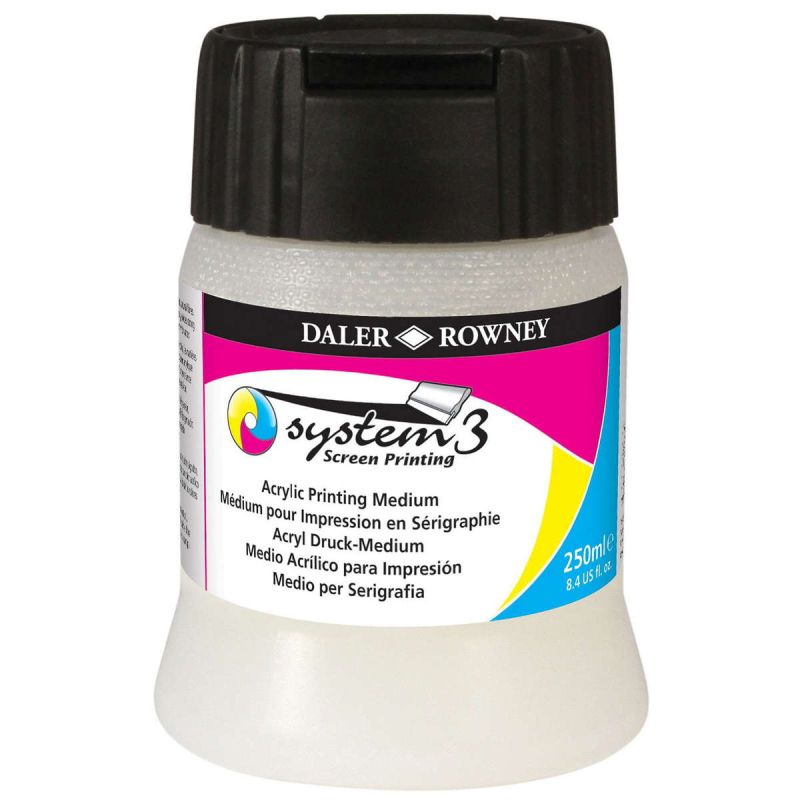

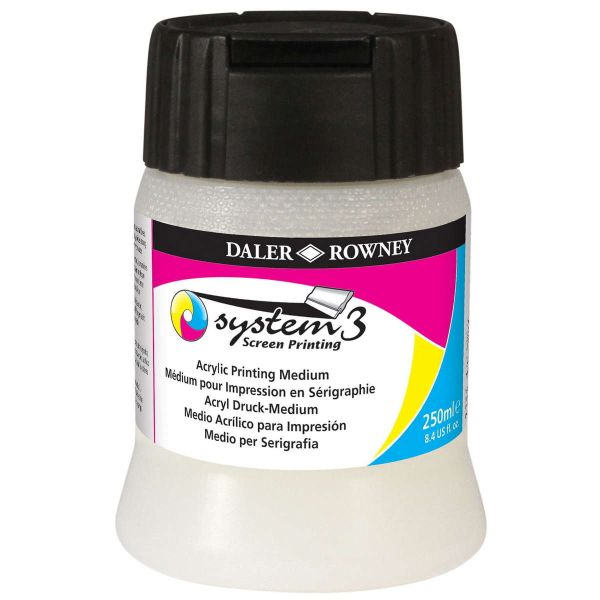

Daler-Rowney System3 Acrylic Screen Printing Medium (127250011) – 250 ml
-
127250011
-
0.300 Kgs
Who it’s for
Printmakers, Graphic Artists, and Illustrators producing limited edition art prints or merchandise who require exact custom color matching without buying bulk screen inks.
Art Students & Educators learning screen printing fundamentals in university workshops or home studio setups.
Textile & DIY Crafters printing custom graphics onto t-shirts, canvas tote bags, posters, and paper goods.
Key features
Viscosity Converter: Transforms heavy-body or soft-body acrylic paint into a smooth, pass-through screen printing paste.
Open-Time Extension: Delays acrylic drying time to stop the mesh from locking up during a print run.
Pigment Volume Retention: Maintains vibrant color density and coverage across paper and textile fibers.
Unique differentiators
High-Value Yield: Blended typically at a 1:1 ratio with acrylic paint, effectively doubling your working volume of screen printing ink.
Daler-Rowney System Integrity: Formulated to integrate seamlessly with the System3 acrylic ecosystem while remaining compatible with other acrylic paint brands.
Non-Toxic Studio Safe: Water-based formulation free from harsh chemical solvents or offensive fumes—ideal for small home studios.
Why this product
Choosing Daler-Rowney System3 Acrylic Printing Medium 127250011 eliminates the costly requirement of buying separate screen printing ink lines for every color you need. It bridges fine art painting and printmaking into one system. With trusted British manufacturing standards, it ensures your mesh screens stay clear, your print edges stay crisp, and your cleanup stays effortless.
FAQ
Q: What is the recommended mixing ratio between paint and System3 Printing Medium?
A: The standard recommended mix is 1 part acrylic paint to 1 part medium (1:1 ratio). For more transparent washes or subtle print effects, the medium ratio can be increased up to 1:2.
Q: Are prints created with this medium washable on cotton fabrics?
A: Yes, for textiles, once the print is completely air-dried, heat-set the design with a dry iron (no steam) on the reverse side or over parchment paper for 2 to 3 minutes to make it wash-fast.
Q: How should screen printing equipment be cleaned after using this medium?
A: Clean screens, squeegees, and mixing trays immediately after printing using warm water and a mild detergent. Do not allow the acrylic mixture to dry inside the screen mesh.